- Payment Options
- Terms Conditions
- Malibu 453 blv
- info@charity.com

Notice: Test mode is enabled. While in test mode no live donations are processed.

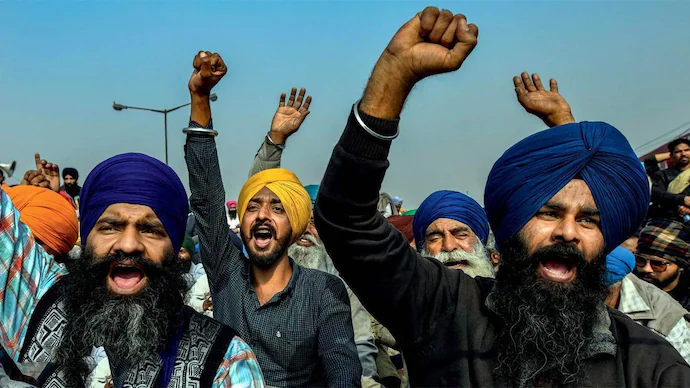
Sikh farmers have been the backbone of India’s agricultural industry, particularly in Punjab, where they contribute significantly to the country’s food security. However, systemic issues, government policies, and ongoing repression have left them struggling for survival. The 2020–21 Farmers’ Protests brought global attention to their plight, highlighting not only economic hardships but also the Indian government’s oppressive actions against dissent. For Sikhs in Australia, the cause of Punjab’s farmers resonates deeply with the country’s shared values of justice, human rights, and fair treatment of agricultural workers. This article explores the challenges faced by Sikh farmers, the Indian government’s role in their oppression, and why Australians should stand in solidarity with Punjab’s farming community.
Punjab’s agricultural crisis is not just an Indian issueit has global repercussions. As one of the most agriculturally productive regions in the world, Punjab has historically been referred to as the “Granary of India.” However, its farmers face a crisis due to:
1. Climate Change and Environmental Degradation: The overuse of groundwater for irrigation, monoculture farming, and excessive use of chemical fertilizers have led to severe soil depletion and water shortages. According to the World Bank, Punjab’s water table is depleting at an alarming rate, with some regions facing desertification by 2039.
2. Economic Hardships and Farmer Suicides: Punjab’s farmers are burdened with unpayable debts. The National Crime Records Bureau of India (NCRB) reports that between 1995 and 2021, over 350,000 Indian farmers died by suicide, a large proportion of them from Punjab.
3. Diaspora Concerns: The Punjabi Sikh diaspora, especially in countries like Canada, the UK, and Australia, has been actively advocating for fair treatment of farmers. International organizations, including Amnesty International, have condemned India’s use of force against protestors.
The 2020–21 Farmers’ Protest against the now-repealed Three Farm Laws was the largest protest in human history, with millions of farmers marching to Delhi. The response from the Indian government included:
• Peaceful farmers were met with tear gas, water cannons, and police brutality.
• Hundreds of farmers were arrested, detained without trial, and even “disappeared”.
• The death toll among protesting farmers exceeded 750, many due to harsh winter conditions, starvation, or government-inflicted violence.
• The government banned social media accounts that were supporting the farmers.
• Journalists, including Rana Ayyub and Siddique Kappan, faced charges under draconian laws such as the Unlawful Activities Prevention Act (UAPA).
• International media outlets, including the BBC and The Washington Post, reported on these human rights violations.
• The government labeled protesting farmers as “terrorists” and “Khalistanis” to delegitimize their movement.
• Sikh leaders and activists were targeted under India’s sedition laws.
• The National Investigation Agency (NIA) conducted raids on Sikh activists, many of whom had no direct link to the protests.
Australia has a proud tradition of standing for justice, fairness, and workers’ rights. Sikh farmers’ struggles align closely with Australian values, making it crucial for Australians to stand in solidarity with them.
• Australia has a history of supporting its own farmers through subsidies, drought relief, and fair trade policies. The plight of Punjab’s farmers mirrors that of Australian farmers who have fought against corporate control and environmental degradation.
• Example: Australian farmers successfully resisted the corporate takeover of water resources in the Murray-Darling Basin. Similarly, Punjab’s farmers protested against corporate giants like Ambani and Adani.
• Australians value freedom of speech and the right to protest, both of which are being crushed in India.
• Example: The 2021 Melbourne Solidarity Rally saw thousands of Australians, including non-Sikhs, march in support of Punjab’s farmers.
• Australia has taken a firm stance against human rights violations globally, whether in Myanmar, Ukraine, or China.
• Example: Australia imposed sanctions on Myanmar’s military junta after human rights abuses in 2021. Similarly, the international community must pressure India for its oppression of farmers and minorities.
The Sikh community in Australia can play a crucial role in raising awareness and advocating for Punjab’s farmers through:
1. Political Engagement: Lobbying Australian MPs to recognize India’s human rights violations and support resolutions condemning the oppression of Sikh farmers.
2. Educational Campaigns: Hosting university seminars, social media campaigns, and community events to spread awareness.
3. Economic Solidarity: Encouraging support for ethical trade that benefits farmers directly and advocating against corporations that exploit Punjab’s agriculture.
4. Legal Action and Advocacy: Collaborating with international human rights organizations to document and present cases of state-sponsored violence against farmers.
5. Media Representation: Pushing for fair and unbiased coverage of the crisis in Australian media outlets.
The Sikh farmers’ struggle is not just an Indian issue; it is a human rights crisis with global implications. India’s oppressive policies, its crackdown on dissent, and the targeting of Sikh identity make it imperative for the international community, including Australians, to take a stand. Australia prides itself on supporting democratic values, human rights, and the fair treatment of workers—principles that are directly aligned with the cause of Punjab’s farmers.
The Sovereign Sikhs of Australia will continue raising awareness, lobbying for policy change, and strengthening the global justice movement. By standing with Punjab’s farmers, we uphold the values of fairness, dignity, and human rights for all.
1. World Bank Report on Punjab’s Water Crisis (2018)
2. National Crime Records Bureau of India – Farmer Suicide Statistics (2021)
3. Amnesty International Report on India’s Crackdown on Protests (2021)
4. BBC News Coverage of Farmers’ Protests and Repression (2021)
5. The Washington Post – Digital Censorship and Farmers’ Rights (2021)
6. Australia’s Murray-Darling Basin Farming Rights Movements (ABC News, 2022)
Lorem ipsum dolor sit amet, consectetuer adipiscing elit aenean comm odo ligula eget dolor massa Lorem ipsum dolor sit amet, consectetur adipiscing elit. Aenean egestas magna at porttitor vehicula nullam.