- Payment Options
- Terms Conditions
- Malibu 453 blv
- info@charity.com

Notice: Test mode is enabled. While in test mode no live donations are processed.

The attack on Sri Darbar Sahib, commonly known as the Golden Temple, in June 1984 during Operation Blue Star remains one of the most tragic and controversial events in modern Sikh history. The assault, ordered by then Indian Prime Minister Indira Gandhi, resulted in massive civilian casualties, destruction of Sikh religious heritage, and a deepening of the wounds of Indian state oppression against the Sikh community. This event must be examined not only as an attack on a religious site but also as a violation of global human rights, a manifestation of Indian authoritarianism, and an incident that challenges Australia’s shared values of multiculturalism, democracy, and religious freedom.
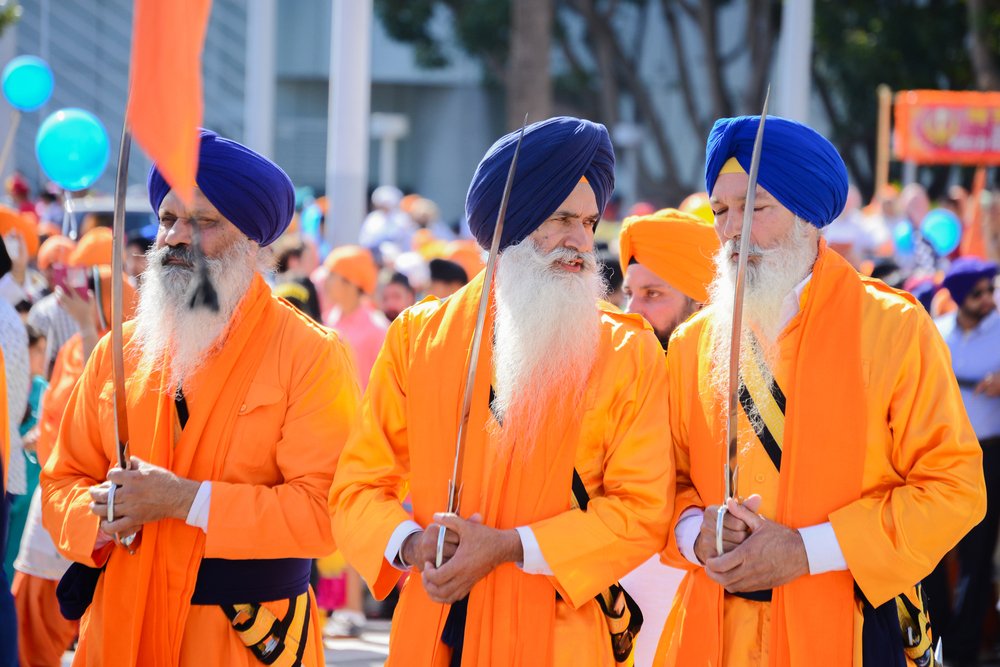
Across the world, attacks on religious institutions are condemned as violations of human rights and religious freedom. The Geneva Conventions (1949) and UN General Assembly Resolutions uphold the protection of religious and civilian institutions, even in times of conflict. However, India’s military action at Sri Darbar Sahib—one of Sikhism’s holiest shrines—demonstrated a stark disregard for international human rights norms.
1. Mass Killings and Extrajudicial Executions
Estimates suggest that thousands of Sikhs, including pilgrims, women, and children, were killed during the military assault, with bodies allegedly disposed of secretly. Amnesty International and Human Rights Watch have repeatedly highlighted the Indian government’s use of excessive force, torture, and forced disappearances in Panjab post-1984.
2. Destruction of Sikh Heritage
The Indian Army set fire to the Sikh Reference Library, destroying irreplaceable historical manuscripts, rare scriptures, and historical documents. This act mirrored cultural genocides seen in other oppressive regimes, such as China’s actions in Tibet or the Nazi destruction of Jewish history.
3. Lack of Justice and Continued Oppression
Even after four decades, there has been no accountability for those responsible for the mass killings, rapes, and disappearances of Sikhs post-1984. International organizations continue to demand a UN-led investigation into India’s human rights abuses in Punjab.
Several global powers played an indirect role in the attack on Sri Darbar Sahib by either providing tactical, military, or political support to India.
o Declassified British government documents (2014) revealed that the UK provided military advice to India months before Operation Blue Star. The British SAS (Special Air Service) was consulted on military strategies, including hostage rescue and combat operations in confined spaces, which were used in the attack.
o The UK’s support was largely driven by its economic and diplomatic interests in India, prioritizing its relationship over human rights concerns.
o Israel, a key supplier of military equipment to India, reportedly provided specialized weaponry and training to Indian forces for counterinsurgency operations in Punjab.
o The close military ties between India and Israel have continued to grow, with Israel becoming a significant arms supplier for Indian security operations, including those against Sikh activists.
o The Soviet Union played a strategic role in supporting India’s internal policies, including countering Sikh separatism.
o As a Cold War ally, the USSR provided intelligence, logistical support, and diplomatic cover for India’s actions in Punjab, preventing international scrutiny and condemnation.
The 1984 attack was not an isolated event; it was a continuation of the Indian state’s broader oppression against Sikhs, who have historically demanded greater autonomy and self-determination.
• Systematic Suppression of Sikh Identity: The Indian government has worked to suppress Sikh sovereignty, dismissing their right to self-determination under international law.
• Mass Disappearances (Punjab Insurgency 1980s-1990s): Human rights organizations estimate that 25,000+ Sikhs disappeared, tortured, and extrajudicially killed by Indian security forces under anti-Sikh operations.
• Criminalization of Sikh Activism: Even today, Sikh activists advocating for justice or Khalistan (Sikh sovereignty) are labeled as extremists, mirroring the tactics used by China against Uyghur Muslims or Russia against opposition activists.
Australia prides itself on the values of multiculturalism, religious freedom, and human rights. The Sikh community is one of the fastest growing and most respected in Australia, significantly contributing to the nation’s culture, economy, and diversity. Understanding the attack on Sri Darbar Sahib through Australian values highlights key concerns:
o Australia’s Racial Discrimination Act (1975) protects individuals from religious persecution. The attack on Sri Darbar Sahib was a direct assault on Sikh religious freedom and must be recognized in the same way Australia condemns attacks on churches, mosques, and synagogues.
o Australia has taken strong stances against human rights violations globally, including condemning China’s treatment of Uyghurs and Russia’s invasion of Ukraine. The same moral and diplomatic pressure should be applied to India’s human rights violations against Sikhs.
o Indian nationalism, particularly Hindutva extremism, is growing in Australia, leading to hate crimes against Sikhs and attempts to whitewash the history of 1984. The Australian government must take a stand against foreign interference and ensure that Hindutva-driven extremism does not take root in multicultural Australia.
• Political Advocacy: Sikh organizations in Australia must lobby for the recognition of the 1984 Sikh Genocide in the Australian Parliament, similar to how Canada recognized it.
• Community Awareness: More educational initiatives, documentaries, and exhibitions should be organized to inform Australians about the Sikh genocide and state-sponsored oppression.
• Countering Hindutva Propaganda: Australian Sikhs must actively combat misinformation, ensuring that the truth of 1984 and Sikh oppression is preserved in global narratives.
• Legal Action: Push for Magnitsky-style sanctions against Indian officials responsible for human rights abuses against Sikhs.
The attack on Sri Darbar Sahib was not just an attack on a religious placeit was a state-orchestrated massacre against the Sikh people. Understanding this atrocity through the lens of global human rights, Indian oppression, and Australian values highlights the urgent need for justice, accountability, and recognition. The Sikh community in Australia has a critical role to play in ensuring that these historical injustices are not forgotten and that human rights violations against Sikhs are acknowledged on the global stage.
As Australia champions justice, religious freedom, and multicultural respect, it must also stand against Hindutva extremism and Indian state oppression, ensuring that history is neither distorted nor erased.
Lorem ipsum dolor sit amet, consectetuer adipiscing elit aenean comm odo ligula eget dolor massa Lorem ipsum dolor sit amet, consectetur adipiscing elit. Aenean egestas magna at porttitor vehicula nullam.