- Payment Options
- Terms Conditions
- Malibu 453 blv
- info@charity.com

Notice: Test mode is enabled. While in test mode no live donations are processed.

The 1984 Sikh Genocide remains one of the darkest chapters in modern Indian history, where thousands of innocent Sikhs were brutally massacred in organized pogroms across India, particularly in Delhi, Kanpur, and Bokaro. This mass violence was not spontaneous but rather a state-sponsored genocide aimed at destroying Sikh identity and instilling fear.
Despite decades of struggle, justice remains elusive, and the perpetrators continue to enjoy political immunity. This article examines the global fight for justice, the continued oppression of Sikhs in India, and why Australia’s shared values of justice, human rights, and multiculturalism make it imperative for Australians to recognize and advocate for justice for the victims of 1984.
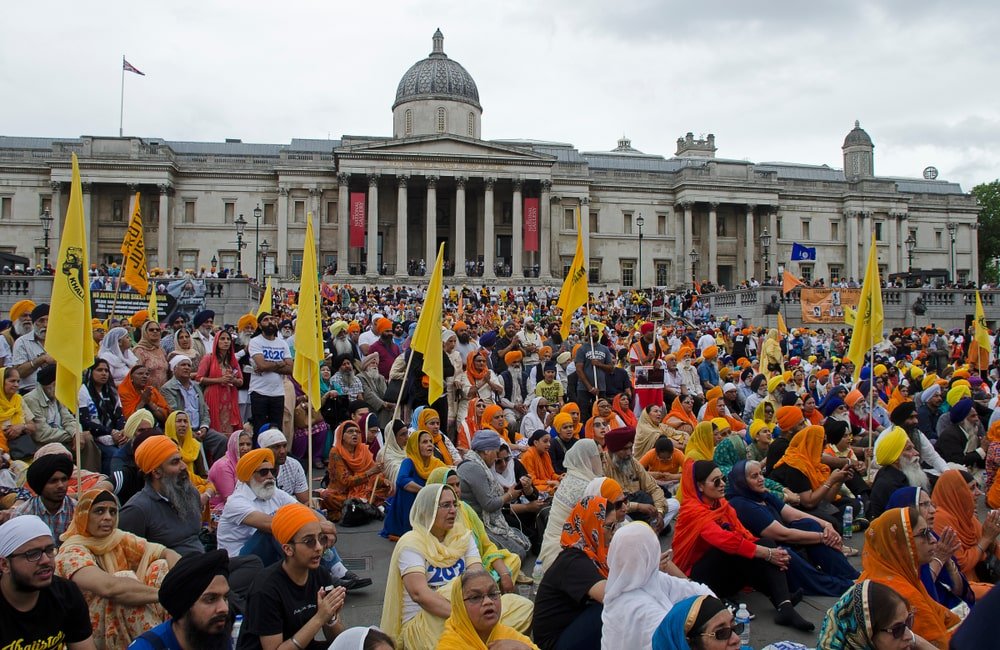
Following the assassination of Prime Minister Indira Gandhi on October 31, 1984, mobs led by Congress party leaders unleashed systematic and premeditated attacks on Sikh men, women, and children. Reports by organizations such as Human Rights Watch (HRW) and Amnesty International confirm that mobs were provided voter lists, addresses, and kerosene supplies, ensuring targeted killings. More than 30,000 Sikhs were killed across India, with thousands of women raped, children burned alive, and homes and Gurdwaras destroyed.
Despite numerous eyewitness accounts and investigative reports, top political leaders like Jagdish Tytler, Sajjan Kumar, and Kamal Nath—who orchestrated these crimes—have never been held accountable. Instead, they were rewarded with government positions, highlighting the deep institutionalized impunity within India’s justice system.
Several nations and international bodies have begun recognizing 1984 as a genocide, challenging India’s narrative of “anti-Sikh riots.” Countries like Canada and the United States have passed resolutions labeling the events as genocide, while UK MPs have raised discussions in Parliament about state-sponsored violence against Sikhs.
Despite international condemnation, India continues to suppress global recognition by using diplomatic pressure, economic leverage, and intimidation of Sikh activists abroad.
The oppression of Sikhs did not end in 1984it has merely taken new forms. Mass extra-judicial killings, fake encounters, and illegal detentions marked Punjab in the late 1980s and 1990s under the guise of counter-insurgency operations. Punjab police officers like KPS Gill orchestrated mass disappearances, with thousands of young Sikh men abducted, tortured, and killed.
India’s continued oppression of Sikhs reflects an authoritarian state unwilling to acknowledge its human rights abuses.
Australia is a champion of human rights, democracy, and multiculturalism, making justice for the 1984 Sikh Genocide a matter of moral and ethical responsibility for Australian society.
o Australia has a strong stance against genocide and state violence, as seen in its support for Rohingya Muslims, Uyghurs, and Indigenous communities.
o Recognizing the Sikh Genocide aligns with Australia’s commitment to global human rights advocacy.
o Australia is home to over 210,000 Sikhs, making them one of the fastest-growing communities.
o Sikhs have significantly contributed to Australia’s economy, defense forces, and emergency services.
o Recognizing their historical trauma ensures a more inclusive and just society.
o Australia has opposed state-sponsored terrorism, holding China, Myanmar, and Russia accountable for human rights abuses.
o Acknowledging the 1984 Sikh Genocide would send a strong message against impunity for crimes against humanity.
o Australia is a signatory to the Genocide Convention (1948), which obligates it to acknowledge and prevent genocidal acts.
o By taking a stance on 1984, Australia can solidify its reputation as a global defender of human rights.
o Support petitions urging the Australian Parliament to recognize 1984 as a Sikh Genocide.
o Engage with MPs and human rights organizations to push for official statements.
o Organize seminars, documentaries, and panel discussions in Australian universities.
o Include the 1984 Sikh Genocide in human rights curriculums
o Australian Sikhs must unite, document survivor testimonies, and build coalitions with Indigenous and human rights groups.
o Encourage Australian lawmakers to adopt resolutions, similar to Canada and the US, acknowledging 1984 as a genocide.
Justice for the 1984 Sikh Genocide is not just a Sikh issueit is a global human rights issue that demands recognition and accountability. India’s continued oppression of Sikhs underscores the need for international intervention.
Australia, with its commitment to human rights, justice, and multicultural values, has a moral responsibility to stand with Sikh genocide survivors and demand truth, justice, and reparations.
Silence is complicity. It is time for Australia to recognize 1984 as a Sikh Genocide and join the global call for justice.
Lorem ipsum dolor sit amet, consectetuer adipiscing elit aenean comm odo ligula eget dolor massa Lorem ipsum dolor sit amet, consectetur adipiscing elit. Aenean egestas magna at porttitor vehicula nullam.